
Table of Contents
Spring is a natural checkpoint for vehicle maintenance. After months of temperature changes, road debris, and everyday driving, several systems in your car may not be operating as efficiently as they were a few months ago. While many drivers focus on oil changes or tire pressure, filters are often overlooked, even though they directly impact airflow, fuel delivery, and overall system performance. Over time, filters collect debris and contaminants that gradually restrict how your vehicle operates.
Replacing key filters in the spring helps restore proper airflow and ensures your vehicle is prepared for warmer weather, increased A/C usage, and heavier driving conditions. Because multiple systems rely on clean air and fluid flow, even a single neglected filter can affect performance more than expected. Taking a few minutes to review these four filters can help maintain balanced operation across your vehicle.
Why 4 Filters Should Be Checked Seasonally
Filters are designed to protect vehicle systems by capturing contaminants before they can reach sensitive components. As these filters collect dirt, dust, and debris, they become more restricted, which can limit airflow or fluid flow. This restriction often develops gradually, which is why many drivers do not notice a change right away, even as performance begins to decline.
1 – Engine Air Filter
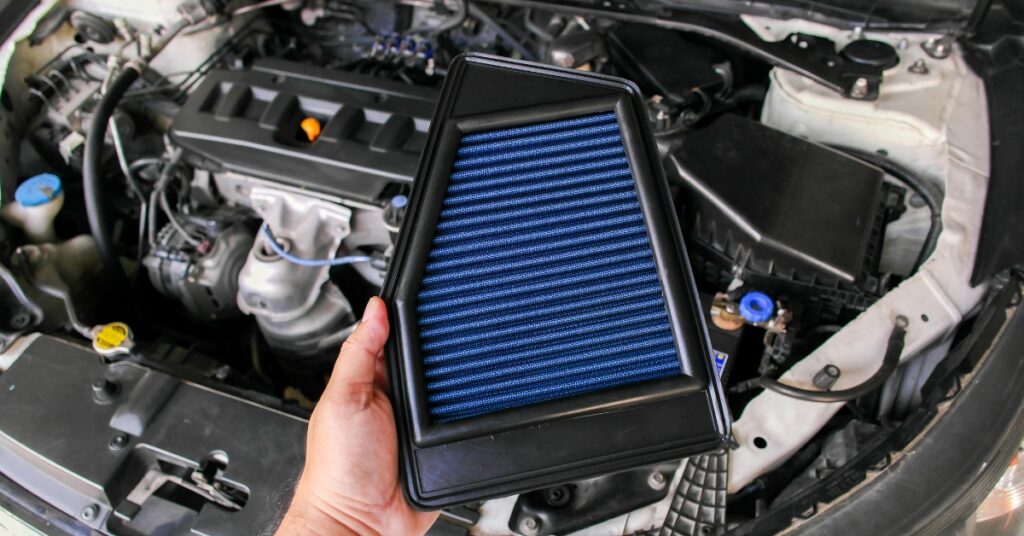
The engine air filter plays a critical role in maintaining proper combustion by ensuring that clean, unrestricted air enters the engine. The engine relies on a precise air-fuel mixture to operate efficiently, and when airflow becomes restricted, that balance can be disrupted. This can cause the engine to work harder to pull in air, which may affect acceleration and fuel efficiency.
A worn or clogged engine air filter can also allow fine debris to pass through if it becomes overloaded, potentially affecting internal components over time. Replacing the engine air filter in the spring helps restore proper airflow, supports efficient combustion, and allows the engine to operate under more consistent conditions as temperatures rise.
2 – Cabin Air Filter (The One Most Drivers Forget)
The cabin air filter is one of the most commonly overlooked filters in a vehicle, even though it directly affects the air you breathe inside the cabin. It filters out pollen, dust, and airborne debris before air enters through the heating and air conditioning system. During the spring months, when pollen levels increase, this filter becomes even more important for maintaining interior air quality.
As the filter becomes clogged, airflow through the vents can weaken, and the HVAC system may have to work harder to circulate air. This can lead to longer cooling times and reduced airflow, especially when using the A/C. Replacing the cabin air filter helps restore proper airflow and allows the ventilation system to operate more efficiently during warmer weather.
3 – Oil Filter
The oil filter works alongside engine oil to protect internal engine components by capturing contaminants such as metal particles, carbon buildup, and debris. As oil circulates through the engine, the filter prevents these contaminants from causing wear in critical components such as bearings and cylinder walls.
Over time, the oil filter becomes saturated and less effective at trapping debris. When this happens, contaminants may circulate more freely through the engine, increasing wear over time. Replacing the oil filter during routine oil service ensures that clean oil continues to circulate properly and helps maintain consistent lubrication throughout the engine.
4 – Fuel Filter
The fuel filter helps ensure that clean fuel reaches the engine by trapping debris and contaminants before they enter the fuel system. Modern fuel systems rely on consistent fuel pressure and clean fuel delivery to maintain proper combustion and engine performance.
As the fuel filter becomes restricted, it can limit fuel flow to the engine. This may lead to hesitation, reduced acceleration, or inconsistent engine performance under load. Replacing the fuel filter when needed helps maintain steady fuel delivery and supports balanced engine operation, particularly as driving demands increase in warmer months.
Why Replacing These Filters Together Makes a Difference
Each of these filters supports a different system, but they all contribute to your vehicle’s efficiency. When multiple filters are restricted simultaneously, the combined effect can affect airflow, fuel delivery, and overall system performance without a single obvious cause.
Addressing them together during a seasonal maintenance visit helps restore balance across the vehicle. Spring is the ideal time to complete this type of maintenance because it prepares your vehicle for warmer temperatures, increased A/C use, and more demanding driving conditions.
Schedule a Spring Maintenance Inspection in Atlanta
At McCullough NAPA Auto Care in Sandy Springs, our ASE-certified technicians inspect and replace vehicle filters as part of routine maintenance and multi-point inspections. During your visit, we evaluate the condition of the filters, airflow, and fluid systems to determine which services may be beneficial based on your vehicle’s current condition.
Scheduling a spring maintenance inspection helps ensure your vehicle is prepared for the driving season ahead and allows our team to recommend service based on what your vehicle actually needs.