
Table of Contents
Car battery replacement is often associated with dead batteries, but the truth is that a vehicle can still start reliably while the battery itself is already declining internally. Modern battery testing focuses on remaining capacity and system health, not just whether the engine turns over today. Understanding this difference explains why battery replacement is sometimes the correct decision even when the car appears to be running fine.
Why a Car Battery Can Still Start the Engine and Still Be Failing
Starting the engine requires only a brief surge of power, but that does not mean the battery is healthy. As a battery ages, it gradually loses its ability to store and deliver energy consistently. Voltage may appear normal at rest, yet the battery’s internal capacity may be significantly reduced.
This decline happens slowly. Many batteries continue to start a vehicle until the remaining capacity drops below a critical threshold. At that point, failure can seem sudden, even though the battery has been weakening for months. This is why car battery replacement decisions are often based on testing data rather than symptoms alone.
What Battery Testing Looks for Beyond “Will It Start”
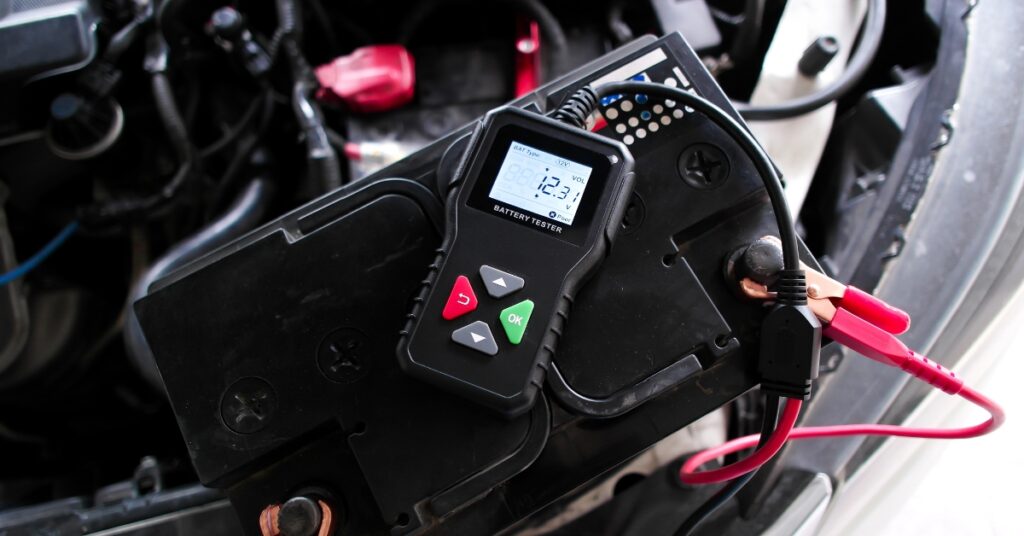
Professional battery testing measures more than surface voltage. It evaluates how the battery performs under load and how much usable capacity remains. These results provide a clearer picture of reliability than a simple start test.
Why “Marginal” Test Results Matter
A battery that tests as marginal has lost enough capacity that failure is likely in the near future. While it may still start the vehicle under ideal conditions, it has less tolerance for cold starts, short trips, or increased electrical demand. Marginal batteries are a common cause of intermittent no-start situations and inconsistent electrical behavior.
Replacing a battery at this stage avoids breakdowns and prevents stress on other components. This is a key reason car battery replacement is often recommended before a complete failure occurs.
How Weak Batteries Affect Modern Vehicles
Modern vehicles rely on a stable electrical voltage to operate correctly. Control modules, sensors, fuel systems, and safety features all depend on a consistent power supply. When a battery weakens, voltage fluctuations can cause issues that appear unrelated to the battery itself.
Drivers may experience warning lights, rough idle, erratic electronics, or intermittent system faults. These issues are sometimes misdiagnosed as sensor or module failures when the underlying problem is an aging battery. Addressing battery health early prevents unnecessary repairs and diagnostic confusion.
Electrical Issues That Aren’t Really Electrical Problems
Low voltage can trigger false alerts and unpredictable behavior in modern vehicles. A declining battery may cause infotainment resets, warning messages, or inconsistent starting behavior without leaving a clear fault code. Replacing the battery at the appropriate time often resolves these issues without further repair.
When Car Battery Replacement Is Recommended Before Failure
Car battery replacement is often recommended when testing shows reduced capacity, even if the vehicle still starts. This is a preventative decision, not a reactive one. Waiting until failure increases the risk of being stranded and can lead to additional wear on the starter and charging system.
The Cost and Risk of Waiting Too Long
Delaying car battery replacement increases the likelihood of emergency breakdowns, towing costs, and lost time. It can also strain the starter motor as it compensates for reduced battery output. Replacing a battery in a controlled setting is more reliable and less disruptive than dealing with a failure at an inconvenient time.
Why Professional Car Battery Replacement Starts With Testing
Not all battery replacements are the same. Professional car battery replacement begins with testing to confirm that the battery is the correct cause of the issue. This includes evaluating battery strength, charging system output, and electrical connections.
At McCullough NAPA Auto Care, battery replacement is based on diagnostic results, not assumptions. This approach ensures the correct battery is installed, underlying issues are addressed, and repeat failures are avoided. For drivers searching for car battery replacement near me, this level of evaluation makes a meaningful difference in long-term reliability.
Get Reliable Car Battery Replacement Before Problems Start
Car battery replacement is about preventing failure, not reacting to it. McCullough NAPA Auto Care in Sandy Springs provides ASE-certified battery testing and professional replacement based on accurate diagnostics. If testing shows your battery is nearing the end of its service life, replacing it early helps avoid breakdowns and protects your vehicle’s electrical systems.
If you’re searching for dependable car battery replacement near you, schedule a battery evaluation with McCullough NAPA Auto Care and get clear answers before problems begin.
FAQ About Car Battery Replacement
Yes. A battery can lose significant capacity while still starting the engine, which testing reveals before failure.
Waiting increases the risk of breakdowns, towing, and additional wear on the starter and electrical system.
It means the battery is nearing the end of its reliable service life and is likely to fail soon.
Yes. Modern vehicles are sensitive to voltage changes, and weak batteries can cause false alerts and system glitches.
Professional replacement should always start with testing to confirm the battery is the root cause.